Eleventh Street Police Station
Native SonThe Eleventh Street Police Station is a site of police custody in Chicago where Bigger Thomas is held after his capture. In the opening of Book Three, the station’s cold bars and his silent, unresponsive presence make the transition from public manhunt to confinement concrete: the pursuit has reached him, and his movement and speech are now controlled by officials.
Setting and Custody
After being moved among police stations, Bigger lies on a cot at the Eleventh Street Police Station beneath the pale February sunlight coming through the steel bars. The station is presented through this restricted cell space rather than through a wider description of its rooms or operations. Its bars, cot, and guarded custody establish the immediate conditions of his confinement.
Bigger’s Silence
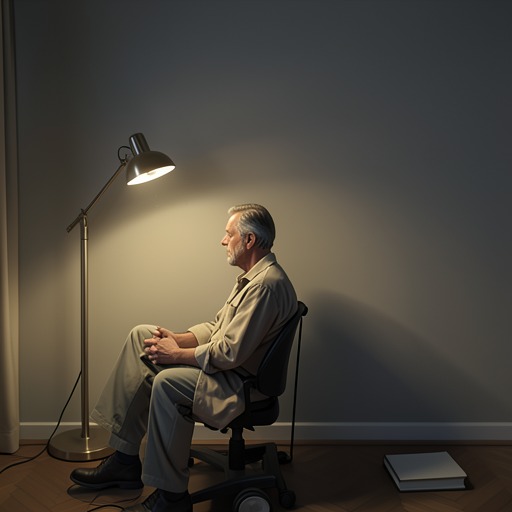
At the station, Bigger refuses to speak despite being threatened, persuaded, bullied, and repeatedly pressed by officials. He sits with his head bowed or lies face down; food is brought and removed untouched, cigarettes remain unopened, and he will not drink water. When officers move him, they lead him by the wrist, and he goes without resistance. His silence and withdrawal follow the capture, but the narrative distinguishes them from a simple momentary stupor: he has shut away the events behind him and does not react to those around him.
From Manhunt to Confinement
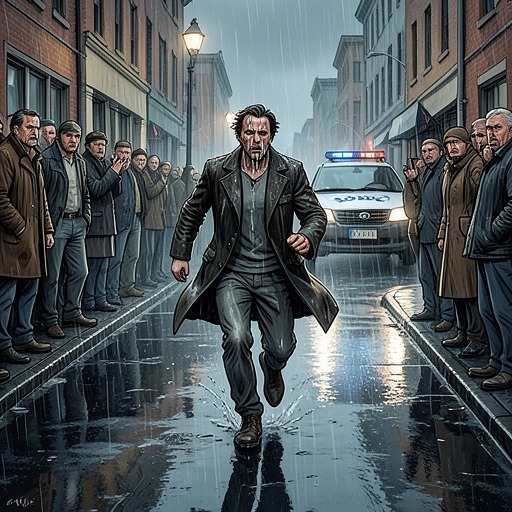
The station’s significance is sharpened by the pursuit that precedes it. Police and vigilantes search the Black Belt, stop vehicles, and raid Black homes under a blanket warrant; the expanding search is also represented by a newspaper map whose remaining unsearched area contracts toward Bigger’s hiding place. Once he is captured, the station becomes a point in a broader chain of police custody, as officials carry him from one station to another. The novel thus places formal confinement after a hunt that has already subjected Black neighborhoods and residents to extensive surveillance and intrusion.
Narrative Significance
The station anchors the change in the novel’s spatial and narrative pressure: Bigger moves from evading searchers in the city to being physically held and transported by authorities. Yet capture does not produce an immediate account of his actions. At the station he remains silent, with the events he has pushed out of mind still withheld from his present awareness. The location therefore marks both the state’s control over his body and the narrative pause before his history is confronted again.